Written by: Our Dermatology Team
Updated: November 2026

The short version
In this guide
The dermis gives skin its structure through a matrix of collagen and elastin fibers, while the stratum corneum retains water at the surface.
With age, dermal collagen and elastin gradually decline, epidermal turnover slows, and the barrier holds less moisture. The first static fine lines commonly become visible between the late 20s and 30s.
Chronological aging is only one contributor. Four others account for much of what is visible:
This distinction sets expectations. Hydration and retinoids can make early dynamic lines look softer. A deep static fold is a structural finding and usually calls for a different approach.
Search for "anti-wrinkle products" and you will see hundreds of options. Almost all of them fall into a handful of types. Here is what each is realistically built to do.
Type
Wrinkle cream / moisturizer
Anti-wrinkle serum
Retinol and retinoid creams
Eye cream for wrinkles
Neck firming cream
Wrinkle patches
In-clinic treatments
If you remember one thing from this table: products that sit on the skin are good at hydration and maintenance. They are not built to rewrite deep lines, and any ad that suggests otherwise deserves a second look.
Marketing names change every season, but the ingredients behind effective routines have stayed remarkably consistent. These are the ones dermatologists mention most often.


Before you buy any anti-wrinkle product, run it through this quick checklist.
You do not need ten steps. A routine you will actually follow beats a perfect one you abandon in March.
Add extras like eye cream, neck cream or a weekly treatment only after the basics feel settled.
Introduce one new product at a time, two to four weeks apart, so you know what is helping and what is irritating.
This is the part brands rarely say out loud: skin changes slowly. A realistic timeline for a consistent routine looks like this.
" transform="translate(1.75 1.75)" width="12.5px"/><path d="M 0 5.667 L 5.667 0" fill="transparent" height="5.66668px" id="g4Ha3gCSe" stroke-dasharray="" stroke-linecap="round" stroke-linejoin="round" stroke-width="1.5" stroke="rgb(131, 18, 26)" transform="translate(5.333 5.333)" width="5.66667px"/><path d="M 5.667 5.667 L 0 0" fill="transparent" height="5.66668px" id="AdkLStPvQ" stroke-dasharray="" stroke-linecap="round" stroke-linejoin="round" stroke-width="1.5" stroke="rgb(131, 18, 26)" transform="translate(5.333 5.333)" width="5.66663px"/></svg>)
If you have used a good routine for several months and feel it has stopped moving, you are not imagining things, and you probably did not choose the wrong cream.
The stratum corneum exists to keep substances out. That is the right design for protection, but it also limits how much of a topical active penetrates beyond the surface. Molecular size, formulation and the integrity of the barrier all affect delivery, which is why a higher concentration on the label does not always mean more reaching the skin.


In clinical practice, penetration-enhancing approaches such as professional microneedling are used for this reason. At home, a newer category of devices aims to create a similar pathway in a simpler way. One of them is covered next, so you can judge whether it is worth considering.
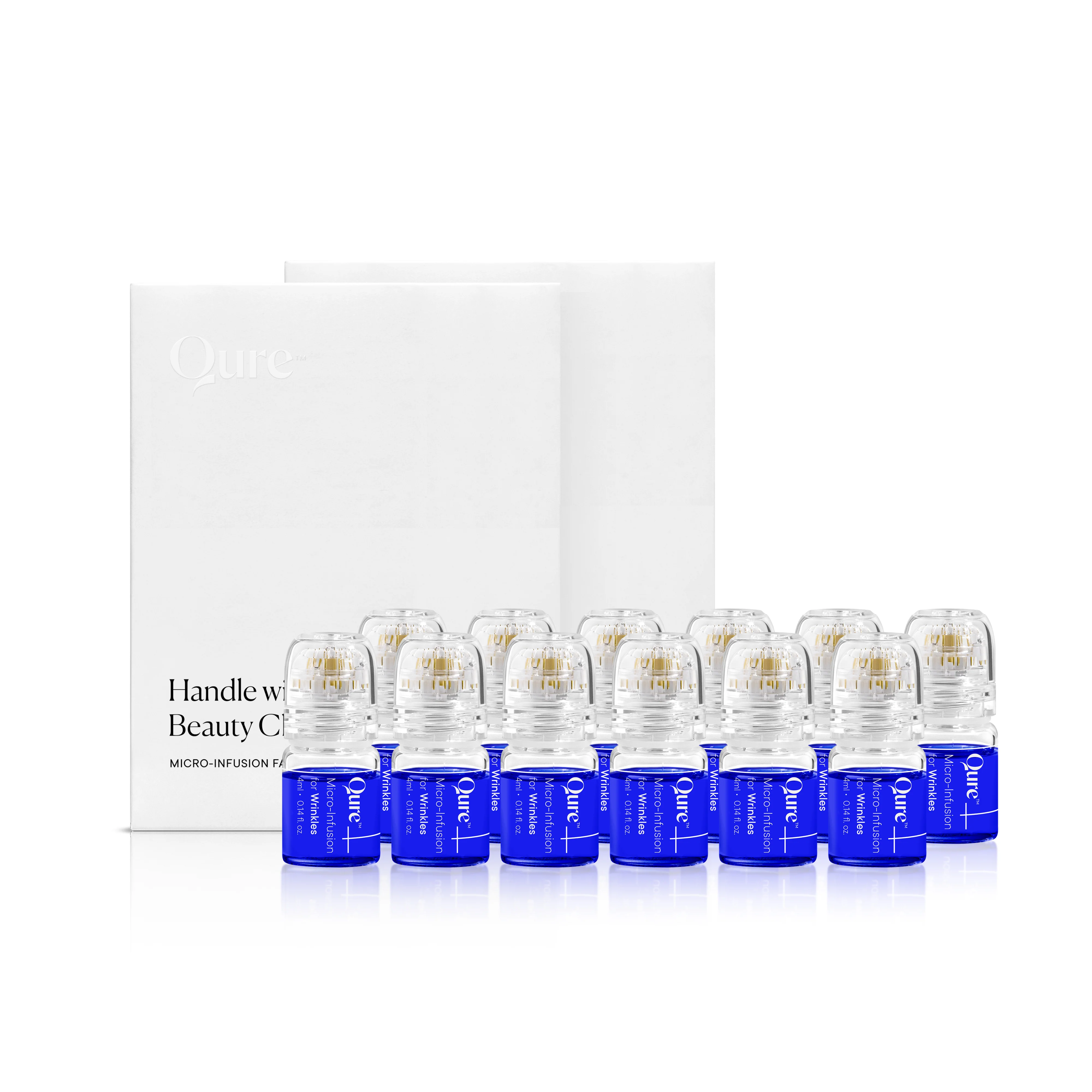
A micro-infusion system uses a small stamping device with single-use, gold-plated needles to create tiny micro-channels in the surface of the skin. A targeted serum is applied as you stamp, so the ingredients are placed where they are meant to go instead of only sitting on top.
The key differences from a traditional derma roller are the stamping motion (straight in and out rather than rolling across the skin at an angle), a fresh needle head for every treatment, and a serum made to be used with the device. People use it about once every two weeks, in the evening, as part of their routine.

" height="14px" id="Is4Pk7XJo" transform="translate(1 1)" width="14px"/><path d="M 0 2.852 L 1.829 4.667 L 6.533 0" fill="transparent" height="4.666709999999999px" id="ddkjSJJ3V" stroke-dasharray="" stroke-linecap="round" stroke-linejoin="round" stroke-width="1.5" stroke="rgb(255, 255, 255)" transform="translate(4.733 5.667)" width="6.53331px"/></svg>)

Who should check first?
As with any at-home device, talk to your dermatologist before starting if you are pregnant or nursing, have active acne or a skin infection, are prone to cold sores, have eczema or rosacea flare-ups, or are using prescription retinoids or other strong topicals. Skip treatment on broken or irritated skin.
What is the best anti-wrinkle product?
Do anti-wrinkle creams really work?
Anti-wrinkle serum or cream: which should I use?
How do I get rid of forehead wrinkles?
How can I reduce smile lines?
Is retinol good for wrinkles, and how do I start?
What age should I start using anti-wrinkle products?
Can you get rid of wrinkles permanently?
How is a micro-infusion system different from a derma roller?
How often can I use a micro-infusion system?
|